
Homenaje a la Patria: Latin American National Atlases
- Publication
- Latin American Research Review
- Volume
- 30
- Issue
- 1
- Pages
- 256-265
Peru · Version 3
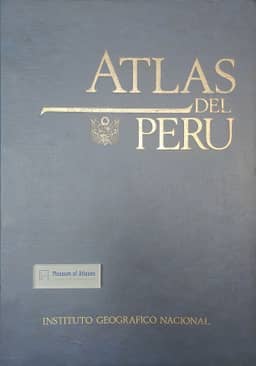
2000The review treats the 1989 Atlas de Perú as an impressive 400-page national atlas, 20 by 14 inches, with about half maps and half explanatory text. It was produced mainly by the Instituto Geográfico Militar, with a civilian geographer as editor and more than sixty scientific collaborators and seventeen institutions listed. Most maps show the whole country at three basic layouts and scales; the cartography is generally high quality, though some pictorial symbols are difficult to interpret. The reviewer notes a lack of formal organization—no chapters or sections guide the reader—and describes a roughly fifty-page introductory section with nationalist material and school-atlas-style content before the core thematic and departmental maps. The atlas includes departmental maps facing satellite images, a long textual remainder with departmental and place-name detail and an index, but no general bibliography, and some citations are too vague to follow.
View whole-article summary
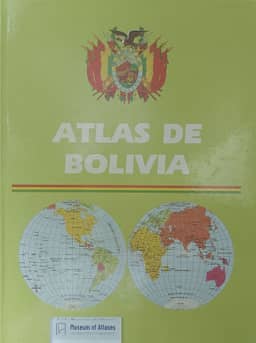
This article reviews and evaluates six recently published national atlases from Latin America, including the Atlas de Colombia (4th edition), Atlas Nacional de México (3 volumes), Nuevo Atlas Nacional de Cuba, Atlas de Perú, Atlas Nacional de la República de Panamá, and Atlas de Bolivia. The article first defines the criteria for a 'national atlas': it must be produced under the auspices or with the approval of the national government, aim to provide broad thematic coverage of the nation, and be produced to high intellectual and cartographic standards for scholarly research. It then provides detailed assessments of each atlas, covering physical specifications, organizational structure, thematic content, cartographic quality, and strengths and weaknesses. The Atlas Nacional de México is particularly praised for its monumental scale, rich thematic coverage, and fine cartography, though it is noted for overly complex symbols and lack of an index. The Nuevo Atlas Nacional de Cuba is recognized as a continuation of Cuba's strong cartographic tradition, demonstrating extensive collaboration and high production quality. Other atlases show varying strengths in thematic breadth and presentation but commonly suffer from vague citations, lack of general bibliographies, or missing indexes. The article concludes that while the quality of these atlases ranges from outstanding to barely acceptable, all serve as valuable reference sources for Latin American studies, with environmental, cultural, and historical content retaining long-term utility, and recommends their acquisition by university libraries with relevant programs.
Related Atlases

Comments
Loading...
0/2000