
Homenaje a la Patria: Latin American National Atlases
- Publication
- Latin American Research Review
- Volume
- 30
- Issue
- 1
- Pages
- 256-265
Cuba · Version 4
1989The review treats the 1989 Nuevo atlas nacional de Cuba as a single-volume national atlas that builds on Cuba's earlier national, general and demographic atlases. It was produced by the Instituto de Geografía de la Academia de Ciencias de Cuba, the Instituto Cubano de Geodesia y Cartografía and Spain's Instituto Geográfico Nacional, with 1,500 people from more than 150 Cuban institutions assisting. The reviewer describes 220 full-color map pages: nearly half on the physical environment across eleven chapters, the remaining twelve on human geography, with detailed treatment of history and revolution, population and settlements, social infrastructure and the agricultural economy, and briefer coverage of industry, transport and commerce, human-environment interaction, landscapes, sugar, construction, regional economies and international trade. He calls it a cartographer's dream—short on text and strong on clear, attractive maps with attributed authorship—but notes that map sources are not printed and the bibliography is under a page.
View whole-article summary
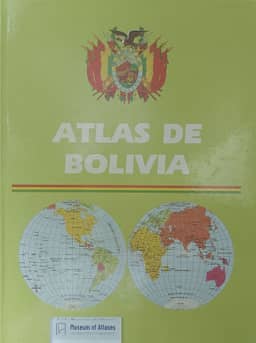
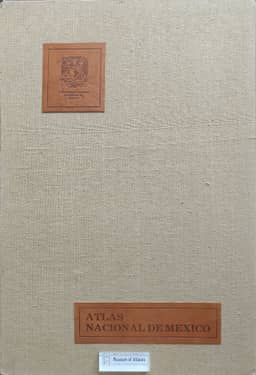
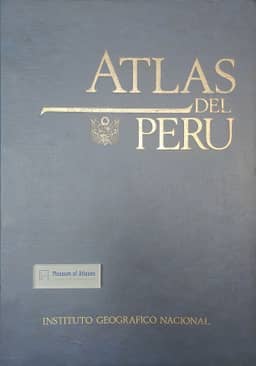
This article reviews and evaluates six recently published national atlases from Latin America, including the Atlas de Colombia (4th edition), Atlas Nacional de México (3 volumes), Nuevo Atlas Nacional de Cuba, Atlas de Perú, Atlas Nacional de la República de Panamá, and Atlas de Bolivia. The article first defines the criteria for a 'national atlas': it must be produced under the auspices or with the approval of the national government, aim to provide broad thematic coverage of the nation, and be produced to high intellectual and cartographic standards for scholarly research. It then provides detailed assessments of each atlas, covering physical specifications, organizational structure, thematic content, cartographic quality, and strengths and weaknesses. The Atlas Nacional de México is particularly praised for its monumental scale, rich thematic coverage, and fine cartography, though it is noted for overly complex symbols and lack of an index. The Nuevo Atlas Nacional de Cuba is recognized as a continuation of Cuba's strong cartographic tradition, demonstrating extensive collaboration and high production quality. Other atlases show varying strengths in thematic breadth and presentation but commonly suffer from vague citations, lack of general bibliographies, or missing indexes. The article concludes that while the quality of these atlases ranges from outstanding to barely acceptable, all serve as valuable reference sources for Latin American studies, with environmental, cultural, and historical content retaining long-term utility, and recommends their acquisition by university libraries with relevant programs.
Related Atlases


Comments
Loading...
0/2000