
Development Directions for the National Atlas of the Republic of Korea through a Comparative Analysis of National Atlases
국가지도집의 비교 분석을 통한 대한민국 국가지도집의 발전 방향
- Publication
- 대한지리학회지
- Volume
- 52
- Issue
- 4
- Pages
- 495–510
South Korea · Version 3
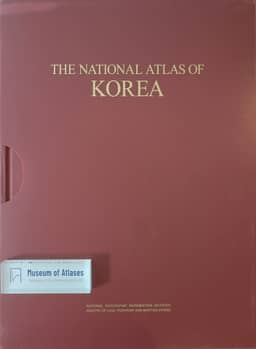
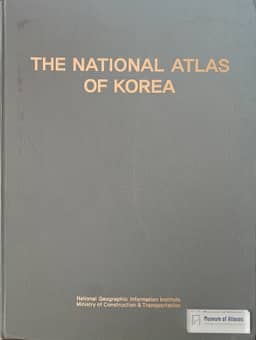
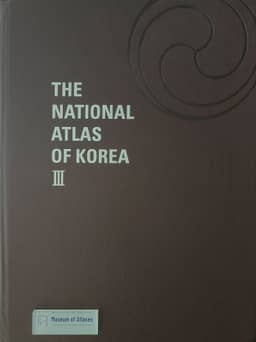
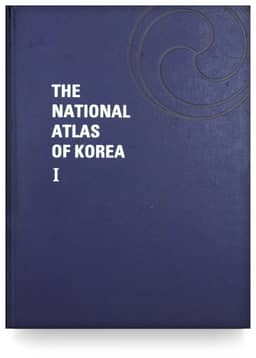
2014–2023Jeong Jae-joon and Hwang Chul Sue describe the Korean- and English-language three-volume National Atlas of Korea published in 2014–2016. Volume I covers territory and history, Volume II the natural environment, and Volume III the human environment. They credit the edition with broader thematic coverage, explanatory text alongside maps and graphics, more varied single-page and double-page layouts, and mapping techniques including cartograms and three-dimensional thematic maps. In their assessment, these changes improved readability and information delivery. They also identify limitations: the books’ size and weight reduce portability and accessibility, while restricted page space and a fixed classification scheme constrain responses to different readers and emerging social issues. On this basis, they recommend a more extensive, gazetteer-like print series, a digital atlas information system, regular online updates with explicit metadata, and permanent staffing and legal provisions for atlas production. These are proposals for future development.
View whole-article summary
The South Korean government published national atlases twice, in 2007 and from 2014 to 2016. The national atlas published between 2014 and 2016 is regarded as more advanced than the 2007 edition in terms of both format and content. However, it still leaves room for improvement in the quality of maps, infographics, and descriptive text compared to models from advanced countries. Furthermore, given the rapidly increasing demand for spatial information in the 21st century and the widespread use of computer technology across society, the national atlas also requires complementary work on its digital systems. Against this background, this paper aims to propose directions for the development of future national atlases of South Korea. To this end, the production and development processes of national atlases were analyzed by dividing them into domestic and international cases, with international cases further examined by separating print and digital formats. Based on this analysis, development strategies for the South Korean national atlas were proposed from four perspectives: the advancement of print-format national atlases, the transition to digital national atlases adopting an atlas information system, the establishment of a system for continuous updates to the national atlas, and institutional mechanisms for producing the national atlas.
Related Atlases

Comments
Loading...
0/2000