
Some Recent Regional Atlases: A Review
- Publication
- Geographical Review
- Volume
- 41
- Issue
- 3
- Pages
- 479-484
Democratic Republic of the Congo
1964Ristow reviews the early fascicules of the loose-leaf Atlas général du Congo, first issued by the Institut Royal Colonial Belge in 1948. He traces the project from its planning in 1933 through wartime interruption and resumption in December 1946. By the end of 1950, four fascicules and an introductory section had appeared, with nine more in press or preparation. The introduction contains a 1:3,000,000 map of the Congo and Ruanda-Urundi and an index of over 4,800 names. Seven subject divisions cover history, geodesy, physical environment, biogeography, anthropology and culture, political and social conditions, and the economy; decimal classification allows expansion. Thematic maps were planned at 1:5,000,000, with French and Flemish text, titles and legends. Ristow regards the work as ambitious and more comprehensive than René de Rouck's separate atlas. His account concerns the early publication stage, not the completed 1964 manifestation.
View whole-article summary
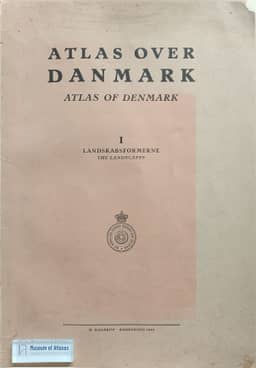
This review examines sixteen regional atlases published over a decade up to 1950, representing eleven countries. It begins by referencing Wright and Platt's classification of atlases into four types—general world, topical world, general regional, and topical regional—noting that the latter two serve as specialized tools for scholars. The author then critiques each atlas by country, covering French topical atlases on wine, textiles, peat bogs, and hydroelectric power; general regional atlases from Denmark, Austria, Germany, Hungary, Portugal, Belgium, Tanganyika, India, and Australia; and a rainfall atlas from Brazil. The review focuses on content organization, cartographic techniques, compilation backgrounds, and scholarly value, with particular praise for the collaborative model and cartographic excellence of the Atlas of Denmark. The article aims to provide geographers with a systematic overview and evaluation of these regional atlases for academic reference.
Related Atlases
Comments
Loading...
0/2000