
Review of books: Atlas do Brasil; Atlas of Israel
- Publication
- Scottish Geographical Magazine
- Volume
- 79
- Issue
- 1
- Pages
- 60
Israel · Version 1
1956–1970J. S. Keates reviews the Hebrew Atlas of Israel, published in 77 loose-leaf parts in 1956–1960 with a separate English contents volume. He describes its detailed coverage of past and present distributions in the territory controlled by the modern state of Israel, alongside maps of the worldwide distribution of Jews. Sections cover cartography, physical geography, history, demography, economics and education, with material ranging from a reproduction of the Madaba Map to plans of modern village settlements. Keates praises the thorough collection and presentation of information. He finds the cartographic techniques generally conventional, while noting an experiment combining hill-shading with coloured contours and the effective tonal grading of rainfall maps. He rates the drafting and reproduction highly and places the volume among the best existing national atlases.
View whole-article summary
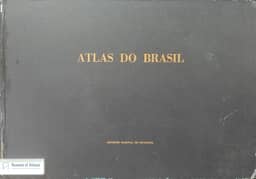
This article compares the national atlases of Brazil and Israel, illustrating the diverse challenges cartographers face when dealing with different national units. The Atlas of Brazil serves as a general geographical sketch of a vast, underdeveloped region, employing basic cartographic methods including physiographic diagrams; despite modest drafting and reproduction standards, its maps are simple and legible, representing a courageous attempt at a formidable task. In contrast, the Atlas of Israel offers a detailed examination of historical and contemporary distributions within the modern state's territory, covering sections on cartography, physical geography, history, demography, economics, and education. Its cartographic techniques follow standard national atlas practices, with high-quality drafting and reproduction, ranking it among the best existing national atlases. Together, these two works highlight the variety of approaches in data presentation and cartographic methodology.
Related Atlases

Comments
Loading...
0/2000