
Bibliographical notes
Notatki bibljograficzne
- Publication
- Bibljografia Pedagogiczna
- Volume
- 1
- Issue
- 3-4
- Pages
- 347-348
Poland · Version 1
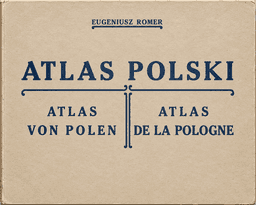
1916–1921The notice reviews the 1921 second edition. It describes the edition as little changed, with two maps added to the existing maps and text: an administrative map of Poland showing the 1920 division into voivodeships and powiats, treaty borders with neighbouring states, and the Lithuanian and Upper Silesian borders marked as unsettled; and, judged more interesting, an original ethnographic map titled “Polacy B,” with a Polish peninsula in Lithuania and Polish islands on a Ruthenian ethnographic base for 1914–1920. The reviewer finds no fundamental changes elsewhere except the hypsometric map of Poland, which now uses Peucker’s colour scale strictly and marks the current borders; its colouring has improved. Text changes follow the political situation, and the replacement of German by English is treated as the more important novelty, opening the atlas to wider circulation in the Anglo-American world. The reviewer also stresses the atlas’s teaching value for schools and suggests that key sheets be sold separately at moderate prices.
View whole-article summary
This article comprises Polish-language academic book reviews of four significant publications. The first reviews a selection of Mieczysław Romanowski's poetry, including the verse tale 'Dziewczę z Sącza', praising the editorial quality and scholarly introduction while noting that the historical background focuses too narrowly on Galicia, inadequately addressing the uprising's roots in the Russian partition. The second reviews the second edition of Romer's 'Geographic-Statistical Atlas of Poland', highlighting two new maps—an administrative map of 1920 and an original ethnographic map of the Polish population—and the replacement of German text with English, which enhances its international reach; the reviewer emphasizes its considerable didactic value. The third reviews Sinko's school edition of Ovid's poetry with selections from Tibullus and Propertius, commending the scholarly apparatus and illustrations while regretting their limited number. The fourth reviews Morawski's translation of Sophocles' 'Electra', praising the introduction's insightful analysis, particularly the comparison between Electra and the biblical Judith regarding their shared passion for vengeance.
Comments
Loading...
0/2000