
Controversies surrounding the new atlases of Albania
Polémiques autour des nouveaux atlas d'Albanie
- Publication
- Méditerranée
- Volume
- 103
- Pages
- 95-96
Albania · Version 1
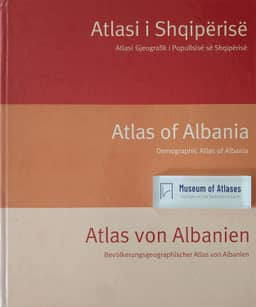
2003Régis Darques reviews the 2003 geographical atlas of Albania’s population alongside INSTAT’s census atlas. Produced by the Academy of Sciences with the University of Tirana, the 2003 volume uses Albanian, English and German and contains about sixty colour map plates with substantial commentary. Its historical analysis spans the century and covers seven themes, including population distribution, migration, urban–rural dynamics, education and health. Darques criticizes its colour choices, cartographic symbolization and occasionally unclear sources, finding its maps less rigorous than INSTAT’s. He also examines the controversy over its treatment of ethnic minorities, noting that press commentators concentrated on one of its 115 pages and that the atlas groups ethnic minorities together without distinguishing individual groups. He argues that these debates need to account for severe population losses in some affected localities, including losses of 80% over the preceding decade, and welcomes the effort to document Albania’s demographic and territorial conditions after decades of censorship.
View whole-article summary
This article reviews two recently published demographic atlases of Albania, one produced by the Academy of Sciences in collaboration with the University of Tirana, and the other by the national statistical office. It highlights that these works fill a significant gap in cartographic documentation and reflect the成果 of international cooperation. The author compares the two atlases in terms of cartographic quality, depth of content, and thematic coverage, paying particular attention to the public controversy sparked by data on ethnic minorities in the Academy's volume. Despite cartographic shortcomings, the article argues that these atlases are essential tools for objectively presenting Albania's demographic and territorial reality, contributing to a better understanding of the major societal transformations the country has undergone since 1989.
Related Atlases
Comments
Loading...
0/2000