
The national atlas of the Federal Republic of Germany. A major project of the Institute for Regional Geography
Der Nationalatlas Bundesrepublik Deutschland. Ein Großprojekt des Instituts für Länderkunde
- Publication
- Leipzig im Kartenbild
- Pages
- 149-160
Germany · Version 1
1998–2012The author describes the Nationalatlas Bundesrepublik Deutschland as the largest project of Leipzig's Institut für Länderkunde (IfL), placing it within the international development of national atlases and the history of German predecessors. The initiative began in 1989/90; an ambitious, centrally funded proposal proved unworkable, and responsibility passed to the IfL in 1995. The revised twelve-volume plan depended on centralized editing, unpaid contributors, public and foundation funding, publisher participation and sales revenue. Intended chiefly for citizens, families and schools, it combined short contributions with maps, illustrations and explanatory texts; a smaller scale and book format reduced costs, and the planned bilingual legends were dropped. The 96-page pilot volume presented in 1997 contained 25 contributions and a sample CD-ROM demonstrating view-only and interactive approaches. The article records completion of Society and State in October 1999 and its digital release in February 2000, completion of Leisure and Tourism and Transport and Communication in June and November 2000, and the impending delivery of Population to the publisher in April 2001. It explains how volume coordinators, roughly 500 scholars, federal agencies and cartographic advisers supported thematic selection, data acquisition and production. The author emphasizes current, question-oriented coverage of Germany's regional differences and post-unification integration. Electronic editions allow viewing and, in their interactive sections, changes to map classification and design; dataset updating is also envisaged. The account reports positive press reception, recognition by the Wissenschaftsrat and the project's 2001 Leipzig Science Prize.
Related Atlases
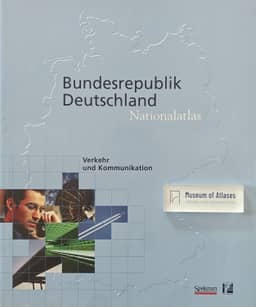
National Atlas of the Federal Republic of Germany, Volume 9: Transport and Communication
Germany · 2001
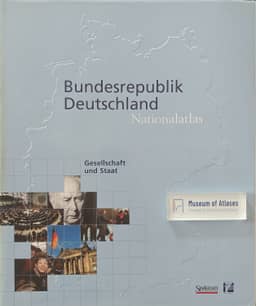
National Atlas of the Federal Republic of Germany, Volume 1: Society and State
Germany · 2000
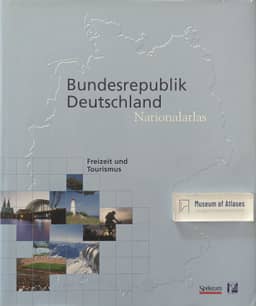
National Atlas of the Federal Republic of Germany, Volume 10: Leisure and Tourism
Germany · 2000
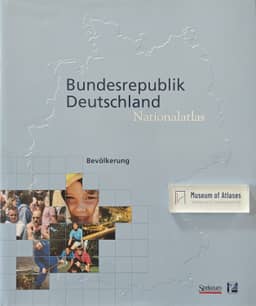
National Atlas of the Federal Republic of Germany, Volume 4: Population
Germany · 2001
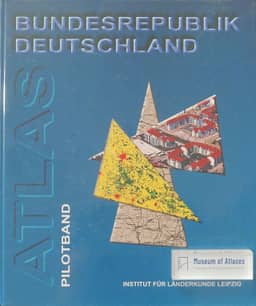
Atlas of the Federal Republic of Germany, Pilot Volume
Germany · 1998
Comments
Loading...
0/2000