
Reports and brief communications: Atlas of Australian resources
Berichte und kleine Mitteilungen: Atlas of Australian Resources
- Publication
- Erdkunde
- Volume
- 15
- Issue
- 4
- Pages
- 311-314
Australia · Version 1
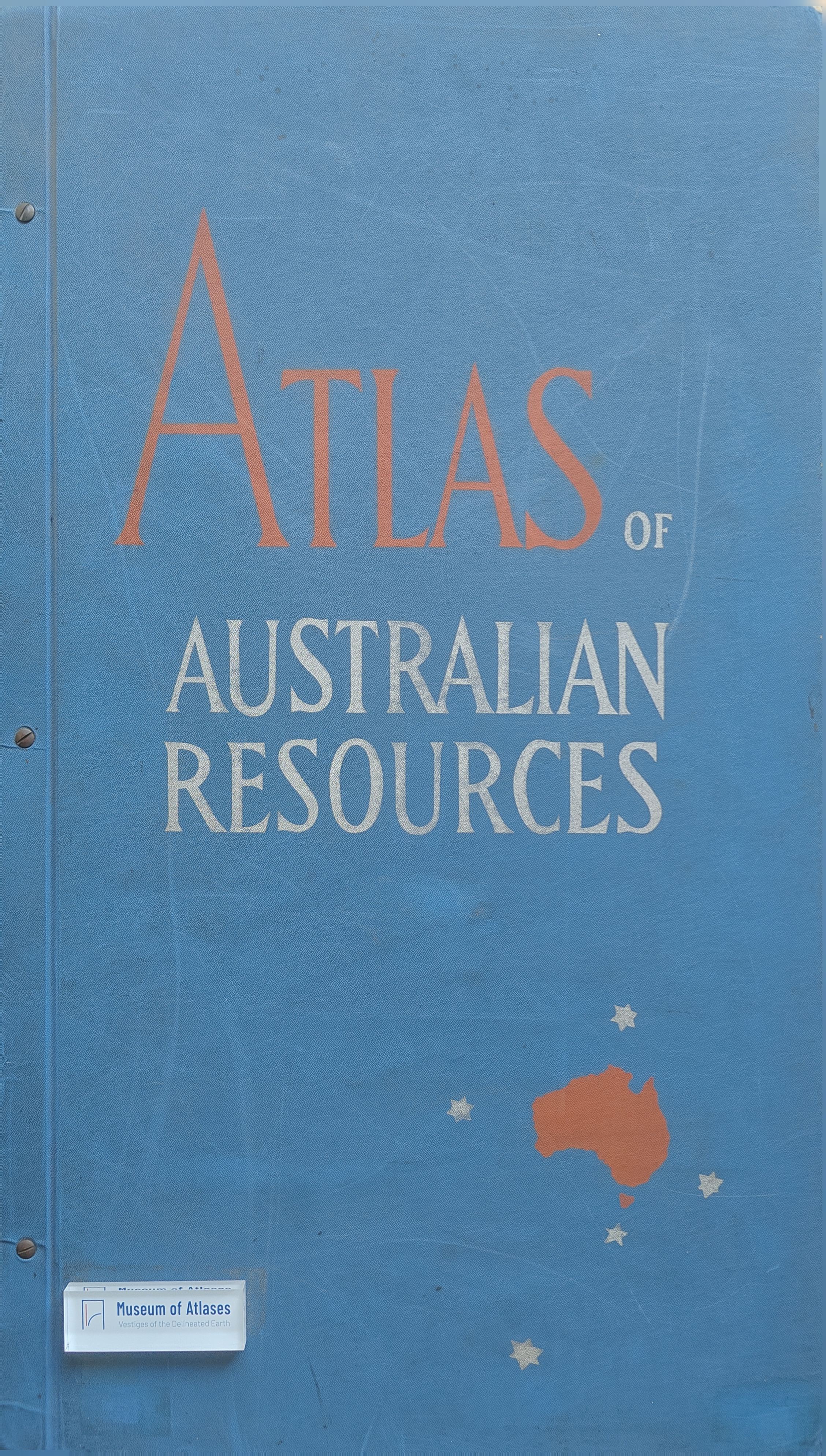
1960–1990Ernst Reiner reviews the Atlas of Australian Resources and its accompanying booklets after its completion in September 1960. Published from 1951, it contains 30 sheets instead of the planned 50, mapping Australia and Tasmania at 1:6,000,000 while excluding overseas territories. Reiner credits K. Frenzel with shaping the atlas, notes Ann F. T. Bauer’s brief stewardship, and credits Trevor Prun with completing the reduced programme under the federal Department of National Development. The review examines maps and explanatory texts covering physical features, geology, climate, water, soils, vegetation, agriculture, industry, transport and population. It discusses techniques including grouped mineral symbols, climatic diagrams and R. J. Williams’s adaptation of Dansereau’s structural vegetation classification to 32 types. Reiner praises the geological and vegetation maps and the demographic information, but identifies outdated population, water-supply and road data, weaknesses in relief depiction and soil classification, and inconsistencies between vegetation and agricultural or forestry maps. He treats the booklets as integral to the maps, praising some explanations while criticizing unclear mineral-production statistics, the lack of an index and the absence of connecting synthesis. Despite these shortcomings and missing thematic maps, he judges the atlas a comprehensive account of Australia’s resources and a substantial achievement, interpreting it as a record of 150 years of European settlement.
View whole-article summary
It may be said that the geographer will be satisfied to receive such abundant information about the continent, although he will regret that no general topographical map was included in the atlas. It must be taken into account that the maps of economic resources inevitably capture a snapshot that will change rapidly with time and economic growth. This naturally also applies to population maps. The preparation of an atlas should therefore not be extended over too long a period and should then appear as coherently as possible. Unfortunately, we miss a map dealing with the distribution of plant and animal diseases, because these are of particular importance for Australia with regard to economic problems. Equally desirable would have been maps on the main occupational groups of the population, their distribution, age structure, the origin of immigrants and their share in individual census districts, as well as a religious map. A word must also be said here about the explanations accompanying the maps. They refer only to each individual map. It is therefore regrettable that a longer summary or connecting and supplementary notes do not link the loose articles into a whole. The brief table of contents with the concise preface is somewhat meager in substance. Here the editor would have had the opportunity to weld the atlas into a coherent whole. No atlas is so perfect that it leaves no wishes unfulfilled, and this one is no exception. However, from it we gain a comprehensive picture of the continent and the federal state of Australia. The maps provide insight into the problems facing humanity on this continent so idiosyncratically endowed by nature, and awaken geographical interest. The atlas is also, at the same time, a balance sheet of what Europeans have created in this continent over 150 years of settlement. It illustrates the result: the roughly 10 million inhabitants, all immigrants, have not only conquered almost every corner of the continent but have also utilized the conditions for denser settlement. Nowhere is the much-discussed question of land classification touched upon, for development has shown that Australians have repeatedly found means and ways to subdue even areas that seemed completely useless through persistent diligence and to wrest an advantage from the land. Today there is practically no area left where settlements and work could not be created. Viewed from this perspective, the atlas is, not only in content but also in form and execution, a significant achievement for Australians, not least for the individual contributors as well.
Related Atlases
Comments
Loading...
0/2000