
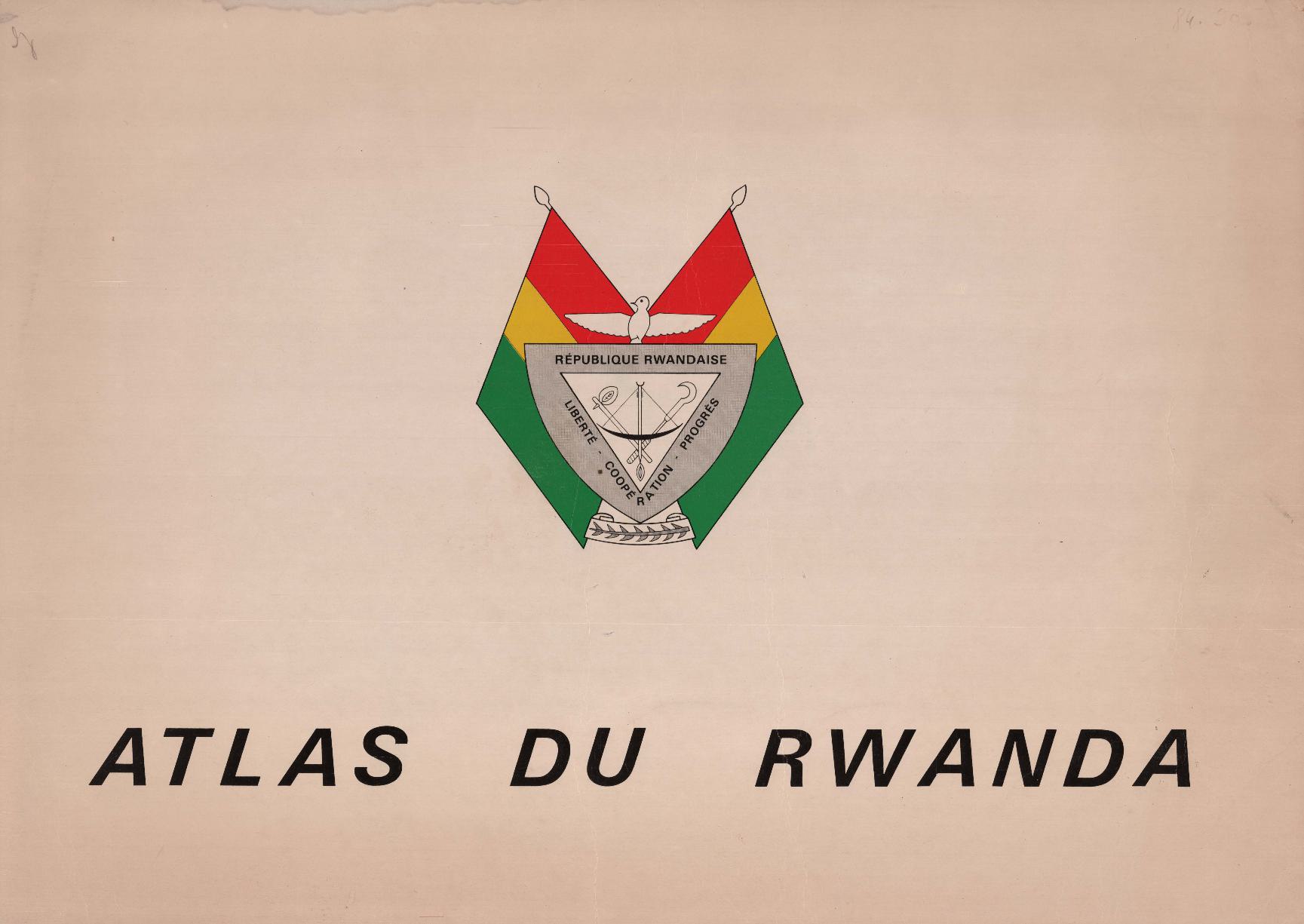
Atlas of Rwanda
FRAtlas du Rwanda
Rwanda · Université nationale du Rwanda · 1981
Related Reviews & Articles
Compte-rendu: Atlas du Rwanda
Gérard Brasseur · 1984
This review discusses the Atlas du Rwanda, published in 1981 and prepared by the National University of Rwanda, which comprehensively presents the geography and history of this small Central African country through 32 maps and commentaries. Beyond its rich geographical coverage (physical, human, and economic), the atlas notably emphasizes the historical dimension: four maps are devoted to the formation of the Rwandan kingdom since approximately 1312, the administrative divisions of 1896, and the routes of early European explorers. Three further maps by B. Lugan cover pre-colonial trade flows, the German and Belgian colonial administrations, and the development of the Catholic Church from 1900 to 1976. Historical elements also appear in maps of population density, religious implantation, and urban growth, particularly of Kigali. The reviewer concludes that the atlas successfully integrates the essence of Rwandan history with high-quality cartography, making it a remarkable reference work in all respects.
Le Rwanda et le Burundi: d'après deux récents atlas
Louis Papy · 1982
This article provides an in-depth geographical and human analysis of Rwanda and Burundi, two small Central African countries, based on two recently published high-quality atlases. Both atlases were funded by the French Ministry of Cooperation and produced by geography teams from the National University of Rwanda and the University of Burundi, respectively. The article begins by highlighting the striking similarities between the two countries in geography and history: both are landlocked nations situated on high plateaus nourished by tropical rains, sharing a past of kingdom-building, German and Belgian colonization, and gaining independence in 1962 and 1963, respectively. They are densely populated, practice intensive agriculture, and are home to the same three ethnic groups—Hutu, Tutsi, and Twa—with stable state structures and unified languages. The core of the article dissects the physical geography of both nations. By interpreting the atlases' content, it systematically describes the geomorphological units from west to east, including the East African Rift occupied by Lake Kivu and Lake Tanganyika, volcanic mountain ranges, the north-south oriented Congo-Nile Ridge, the typical 'land of a thousand hills,' and the eastern plains bordering Tanzania. Regarding climate, the article emphasizes altitude as the dominant factor near the equator, resulting in pleasant temperatures and abundant rainfall, and it delineates various bioclimatic regions. The text also addresses environmental issues under population pressure, particularly soil erosion and deforestation, as well as efforts to reclaim marshy valleys through drainage and irrigation. Finally, it focuses on urbanization, noting the still-low rates and analyzing the rapid growth and central roles of the capitals, Kigali and Bujumbura, while mentioning other, less developed towns and the limited tourism potential. The author concludes that these atlases, with their detailed information and excellent colored plates, make a significant contribution to understanding the regional diversity, environmental challenges, and development prospects of Rwanda and Burundi.
Tags
Comments
Loading...
0/2000