
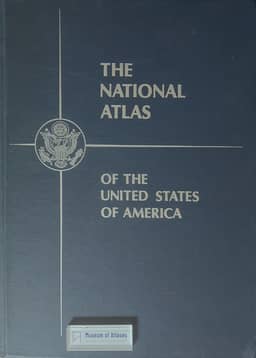
The National Atlas of the United States of America: Impact of Binding
- Publication
- Seventh United Nations Regional Cartographic Conference for Asia and the Far East: Volume II, Technical Papers
- Pages
- 399–402
Summary
This paper assesses how permanent binding affected the production, sales, maintenance, and use of The National Atlas of the United States of America, published in 1971. Planners selected solid binding for its cost, compactness, convenience, security, and support in a library survey, in which 84% of respondents preferred it. However, the survey covered a limited market and assumed a price of $50, half the eventual selling price. During seven years of compilation, newer data required recompilation of some early sheets, increasing costs and disrupting schedules. The bound volume also developed a gutter that obscured information on double-page maps and impeded copying, while preventing replacement or addition of sheets. High prices and increasing obsolescence affected sales; funding, staffing restrictions, and competing priorities limited subsequent sheet revision and publication. Strong sales of unbound remainder sheets and preferences expressed by 13 of the 15 reviewers who discussed binding supported reconsideration of the format. The paper recommends considering loose-leaf or unbound publication for a future revision, with packaging selected through a representative user survey and systematic comparison of available options.
Related Atlases
Comments
Loading...
0/2000